
Trying to understand pregnancy risk while using contraception? Get a quick baseline estimate from your method and use pattern. Had a tubal ligation? Check the tubal ligation failure risk for yearly and lifetime odds.
If you're concerned about a recent single encounter, our 'Am I Pregnant?' calculator can help you estimate your chances and understand the next steps.
Calculate Your Pregnancy Odds Instantly with the world's first contraceptive risk calculator based on peer-reviewed science and trusted by tens of thousands worldwide.
Built by the makers of the Pregnancy Chance Calculator app.
🌸 "Just like checking the weather before leaving home, our calculator helps you forecast your pregnancy risk—empowering you to stay in control." 🌸
How to Use Our Contraceptive Risk Calculator
Keeping track of your pregnancy risk can feel complicated—especially when you're trying not to conceive! Whether you're relying on one contraceptive or combining methods, our Contraceptive Risk Calculator gives you a clear picture of your risk of unintended pregnancy. Just enter the information that's relevant to you, then click the "Calculate" button. The more you share, the more precise your results will be. And don't worry—we never store your data. 🔒✨
Calculator Inputs Explained
Here's what the calculator asks and why it matters:
💊 Contraceptive Method(s):
Choose up to two contraceptive methods. Many people combine methods (like condoms and pills) to lower their risk further—but not every combo is safe or effective. Curious? Check out our guide to contraceptive methods you shouldn’t mix.
✅ Perfect vs. Imperfect Use:
Are you using your contraceptive perfectly every single time? Select "Yes" if you're confident you use the method exactly as instructed. Select "No" if you've experienced slip-ups (missed pills, broken condoms, etc.). Understanding this difference is essential—typical use can significantly lower effectiveness. For more info, see our article: Contraceptive Use Quality: Perfect vs Imperfect.
🛌 Intercourse Frequency:
How many times have you had intercourse during the chosen time period? (e.g., 20). Frequency matters—a higher number typically means higher overall risk if contraceptives aren't used consistently.
👩 Female Age:
What's your age (or your partner's, if female)? Fertility and contraceptive effectiveness both vary significantly by age—particularly after age 35, when fertility starts changing rapidly.
👨 Male Age:
The age of your male partner matters, too. Older males (40+) may experience slightly decreased fertility, but contraceptive effectiveness still primarily depends on the female partner's age and consistent use.
📏 Height & Weight (BMI):
Your BMI (Body Mass Index) can affect hormonal contraceptive effectiveness. Being significantly underweight or overweight may impact contraceptive reliability slightly, especially hormonal methods.
💼 Work Hours per Week:
Working long hours or experiencing constant stress can indirectly influence contraceptive use (forgetting pills, incorrect usage) and fertility patterns—important factors in avoiding unplanned pregnancy.
🚬 Daily Cigarette Intake:
Smoking doesn't just harm your health—it can also slightly reduce the effectiveness of hormonal contraceptives like pills and patches, increasing your overall pregnancy risk.
🍷 Weekly Alcohol Intake:
Moderate or heavy alcohol use might indirectly affect your contraceptive habits or decisions, increasing pregnancy risk. Tracking this helps estimate your real-world risk.
🧪 How Our Calculator Works—The Science Behind the Scenes
This calculator combines published contraceptive-use data with timing information and the details you select to provide a planning estimate. Some optional lifestyle inputs describe circumstances that may affect consistent use; they are not proven to change every contraceptive method's biological effectiveness.
1. Contraceptive Effectiveness & Human Error
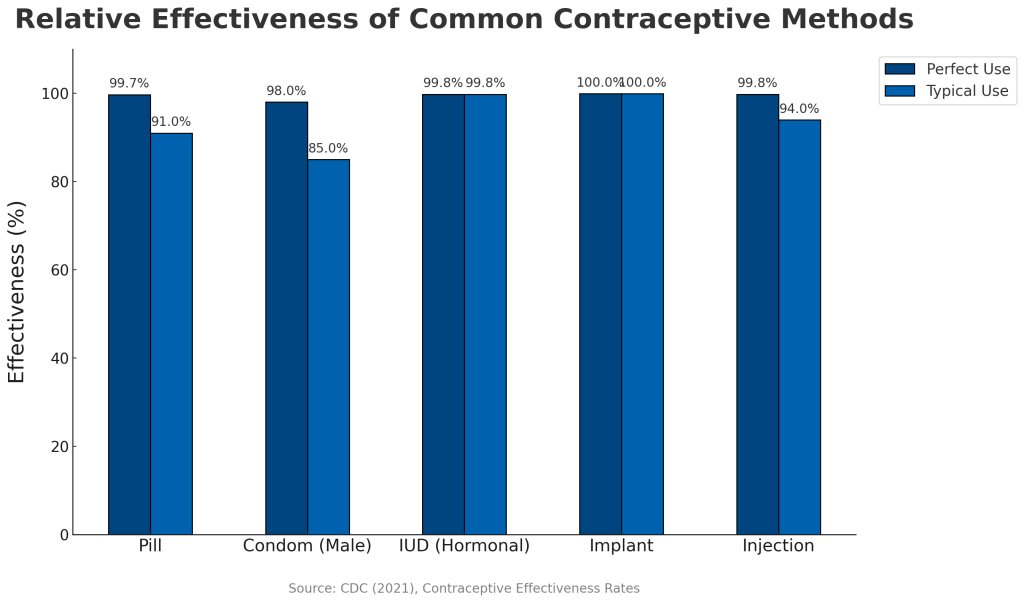
Even the best contraceptives aren’t foolproof if not used consistently. Imperfect use significantly increases the likelihood of pregnancy. Studies clearly show that typical-use failure rates (missed pills, broken condoms, late injections) are much higher than perfect-use rates. See Trussell, 2011 for more on contraceptive failures.
2. Age & Fertility
Age is a huge player in pregnancy risk. Women's fertility typically declines from the early 30s onward, making pregnancy somewhat less likely overall—but contraceptive reliability remains crucial at every age if avoiding pregnancy is your goal. Male age has a smaller but notable influence, with fertility gradually declining after age 40 (see more here).
3. Frequency of Intercourse
More frequent intercourse increases your overall risk, particularly if contraceptives are used imperfectly. Regular intercourse without careful contraceptive use significantly raises your chances of an unintended pregnancy over time.
4. Lifestyle Factors
- 🚬 Smoking: Recorded as a contextual input. This calculator does not assume smoking directly reduces every method's effectiveness.
- 🍷 Alcohol Intake: Heavy alcohol use may make consistent use harder for some people, but this information is included as context for consistent use.
- 💻 Long Work Hours & Stress: Included as a possible adherence context. This information is included as context within the overall estimate.
5. BMI & Contraceptive Effectiveness
BMI effects vary by contraceptive method. This calculator should not be used to decide whether a prescribed method is suitable; see the CDC Selected Practice Recommendations or ask a clinician about a specific method.
📚 Data Sources and Methodology (Our Scientific Credibility)
The sources below provide background data for parts of the estimate. They provide background evidence for the selected factors:
- Contraceptive Failure Rates:
- Intercourse Frequency:
- Age & Fertility:
🩺 Medical Disclaimer
Our Contraceptive Risk Calculator provides scientifically-backed estimates to help you make informed contraceptive decisions. However, it's not a replacement for personalized medical advice or professional care. If you're unsure about your contraception or if your results raise any concerns, always talk to your healthcare provider.
About Us

Our Team
Learn about the pioneers behind this new product.

Our Mission
"Almost everyone is misunderstanding contraceptive effectiveness. We want to change that."
Discover More About Your Fertility




Get in Touch
Have questions or need support?
Email: [email protected]