
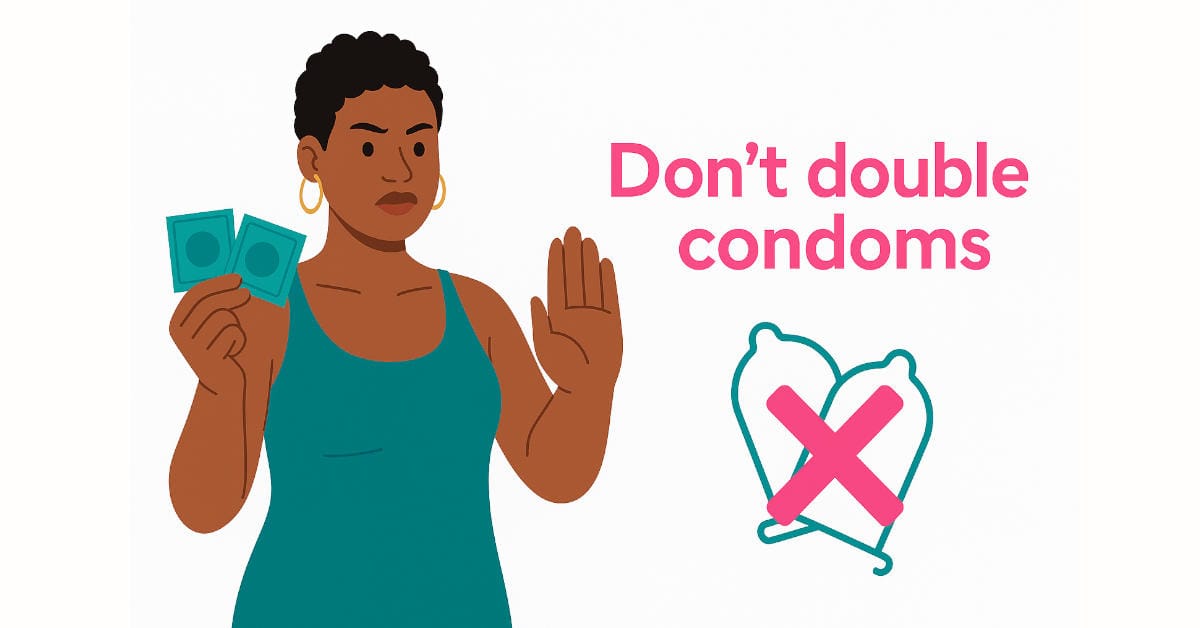
Some contraceptive pairs can reduce protection or add risk. If you want to use two methods at the same time, it is usually safest to choose options that complement each other. The combinations below are ones that guidelines generally advise against, together with alternatives you can discuss with a clinician.
Pairs you usually should not mix
| Do not usually combine | Why it may be a problem | Commonly safer approach |
|---|---|---|
| Two external condoms or an external + internal condom | Friction between condoms can increase the chance of tearing or slipping. Internal and external condoms are designed to be used one at a time. | Use one condom correctly every time. If you want extra pregnancy protection, consider pairing condoms with a highly effective method such as the pill, patch, ring, implant or IUD. |
| Latex condom + oil based lubricant (for example petroleum jelly or coconut oil) | Oil based products weaken latex and can make condoms more likely to break. | Use water based or silicone based lubricants with latex condoms. If you prefer oil based products, talk with a clinician about non latex options. |
| Pill + patch or pill + ring (two combined hormonal methods) | Using two combined hormonal methods at once does not meaningfully increase effectiveness, but it does increase total hormone exposure and the chance of side effects. | Use one combined method (pill, patch or ring). Add condoms if you want protection against many sexually transmitted infections (STIs) or a second pregnancy barrier. |
| Two IUDs at once (for example copper + hormonal) | This is not a standard practice and can increase the risk of malposition, expulsion and complications without evidence of extra benefit. | Use one IUD at a time. If you would like added STI protection, use condoms as well. |
| Layering spermicides (for example gel + film + sponge) | Extra product does not reliably add protection. Frequent use of some spermicides that contain nonoxynol 9 can irritate genital tissue and is not recommended for STI or HIV prevention. | Use one spermicide as directed, ideally together with a condom or diaphragm. Ask a clinician if you have irritation or recurrent infections. |
| Taking different emergency contraceptive pills at the same time (unless a clinician advises it) | Using more than one type at once has not been shown to improve effectiveness. Some combinations, such as taking ulipristal acetate together with a progestin pill, may interfere with how the medicines work. | Choose one emergency contraceptive option and follow the instructions. If you use ulipristal acetate, guidelines usually suggest waiting about 5 days before starting or restarting regular hormonal birth control, and using condoms in the meantime. A doctor, nurse or pharmacist can give personalised advice. |
If something goes wrong
If a condom slips or breaks, or pills are missed around a likely fertile time, emergency contraception may help lower pregnancy risk. Our Emergency Contraceptive Pill Effectiveness Calculator gives general information about timing and modelled risk. In real life, speak with a doctor, nurse or pharmacist as soon as you can about which option is safest for you.

Quick FAQ
Can I use two condoms at the same time?
No. Using two external condoms, or an external and internal condom together, creates extra friction and can increase the chance of tearing or slipping. It is safer to use one condom correctly every time.
Is it safer to take the pill with the patch or ring?
In general, no. Taking more than one combined hormonal method at the same time does not meaningfully improve pregnancy protection and increases total hormone exposure. Most guidelines recommend choosing one method and adding condoms if you want a second layer.
Sources (quick read)
- CDC. U.S. Selected Practice Recommendations for Contraceptive Use, 2024 — emergency contraception guidance, including when to start hormonal methods after ulipristal acetate.
- CDC. Condom effectiveness and correct use — correct and consistent use, and avoiding oil based lubricants with latex.
- Family Planning Handbook. What condom users should not do — advises against using male and female condoms together.
- WHO. Nonoxynol 9 ineffective in preventing HIV infection — frequent use can increase irritation and HIV risk.
- ACOG. Long acting reversible contraception (IUD and implant) — overview of effectiveness and the role of condoms for STI protection.
This page is educational and not medical advice. Talk with a doctor, nurse or clinic about the safest combination for you, especially if you have migraines with aura, smoke, or have increased risk of blood clots.