Why your highest-chance day and predicted ovulation date can be several days apart
How the Pregnancy Chance Calendar estimates fertile days, and why the highest-chance day can come several days before predicted ovulation.

How the Pregnancy Chance Calendar estimates fertile days, and why the highest-chance day can come several days before predicted ovulation.
Estimate your chance of getting at least one euploid embryo from an IVF cycle using two inputs: AMH (ng/mL) and age. The calculator shows a single percentage result and a short note about how your AMH compares with a typical anchor for your age. AMH level (ng/mL) Your age (years) Use your age at egg … Read more
Human chorionic gonadotropin (hCG) is a hormone your body makes in early pregnancy. It is mainly made by tissue that will become the placenta after the fertilised egg has implanted in the uterus. Laboratories usually measure the beta part of hCG, so you will often see “beta hCG” on a blood test report. This is … Read more
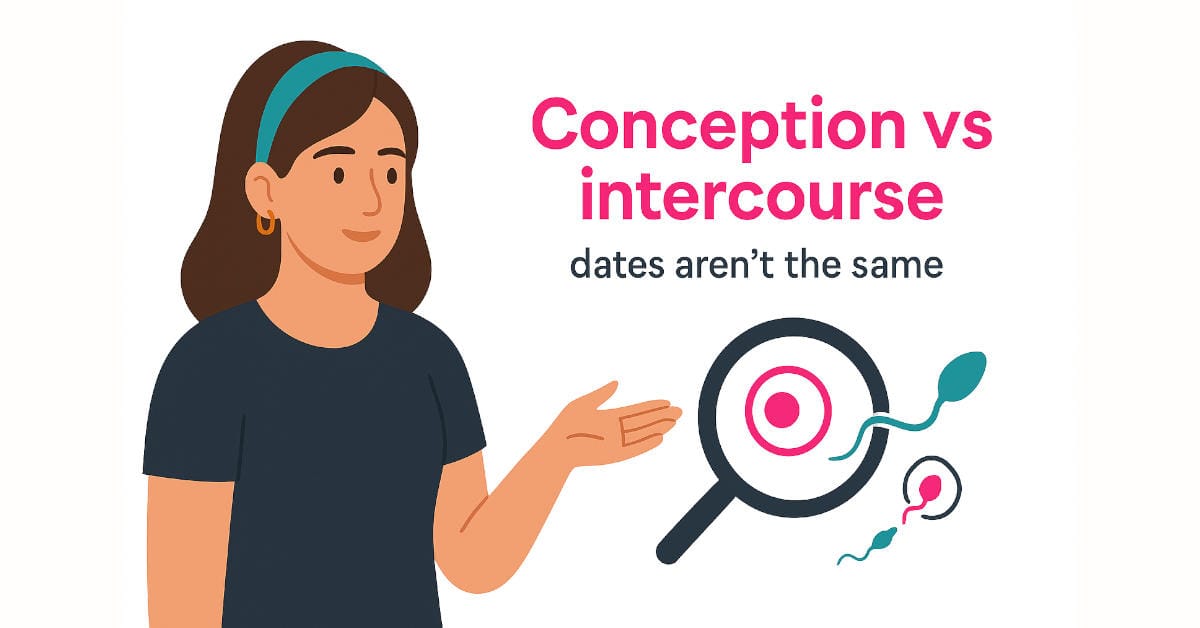
Key points Conception means fertilisation near ovulation, not the day you had intercourse. The fertile window usually spans about six days and ends on ovulation day. Sperm can survive in the reproductive tract for up to about five days in the right cervical mucus, so intercourse before ovulation can still lead to conception later. Implantation … Read more
When you are choosing birth control, it is easy to focus on the method itself, but how you use it also matters. The gap between perfect use (no mistakes) and typical use (real life) can change your pregnancy risk in a meaningful way. What “perfect” vs “typical” use means Perfect use Taking the pill at … Read more
Enter your age and optional partner or lifestyle details to estimate age-based pregnancy chances, rough time-to-pregnancy, and fertility-treatment outlooks. This is a planning estimate, not a diagnosis. It cannot measure ovulation, egg quality, sperm factors, tubal factors, or your medical history. Peer-Reviewed Science Updated Oct 2026 See Methodology Did we solve your problem today? 👍Yes … Read more
Updated: 22 Nov 2025 This page explains how different birth control methods change pregnancy chance and how perfect use compares to typical use in real life. If you want to explore example numbers, you can use tools such as the Condom Risk Calculator, the Pill Risk Calculator, the Combine Methods Calculator or the Advanced Pregnancy … Read more
Some health conditions make ovulation less predictable, affect egg quality, or alter implantation. This page gives an overview of common issues such as PCOS, endometriosis and thyroid disorders, and how they might change your chances of pregnancy. If you want to see rough numbers while you read, you can use tools like the Advanced Pregnancy … Read more
Daily habits such as nutrition, movement, sleep, stress and substance use can nudge fertility up or down. This page walks through the main lifestyle factors and simple targets you can discuss with a clinician. If you like working with numbers, you can later use tools such as the Advanced Pregnancy Chance Calculator, the Ovulation Calculator … Read more
Age changes natural conception odds and timelines. You can use the Fertility Calculator by Age to see a per cycle estimate, then come back to this guide to understand what drives those numbers and what to do next. Below is a simple age based model, plus an overview of how fertility tends to change across … Read more